

How Social Anxiety Rewires Our Brains
Anxiety is a feeling we all know. But for millions of people, a different kind of anxiety takes over their lives: social anxiety. It is more than just shyness or a little nervousness before a big speech. Social anxiety disorder (SAD), or social phobia, is an intense, persistent fear of being watched and judged by others. This fear can be so powerful that it makes everyday interactions—from talking to a barista to attending a work meeting—feel like a monumental challenge. While the emotional toll is clear, what is truly fascinating is the way this disorder physically rewires the brain.
The Brain on High Alert: Unpacking Social Anxiety’s Impact
Think of your brain as a highly sophisticated command centre. In someone with social anxiety, key parts of this command centre start functioning differently, creating a feedback loop of fear and avoidance. Researchers are zeroing in on these differences, revealing a fascinating picture of a brain that is constantly on high alert.
The Fear Centre Goes into Overdrive
At the heart of the brain’s emotional hub is the amygdala, a small region responsible for processing emotions like fear and anxiety. In people with SAD, the amygdala is often overactive and even slightly larger. This means the brain’s “threat detector” is constantly sounding the alarm, even in neutral social situations. Imagine seeing a casual acquaintance on the street; for someone with SAD, their amygdala might react as if they have spotted a Lion.
A Disrupted Communication Network
The prefrontal cortex (PFC) is the brain’s “rational” centre, handling things like decision-making and self-control. Normally, the PFC communicates with the amygdala to tell it when to calm down. But in a socially anxious brain, this connection is weak. Instead of soothing the amygdala, the PFC sometimes ramps up its activity, making the fear even worse. It is like having a supervisor who, instead of de-escalating a crisis, keeps yelling, “This is a real emergency!”
Misinterpreting Social Cues
Another brain region, the anterior cingulate cortex (ACC), helps us manage emotions and process social stress. For those with SAD, the ACC becomes overactive when they encounter negative facial expressions or feel socially rejected. This hyper-sensitivity causes them to over-exaggerate the importance of social slights, leading them to believe minor incidents are major events.
The Body’s Response to Social Anxiety
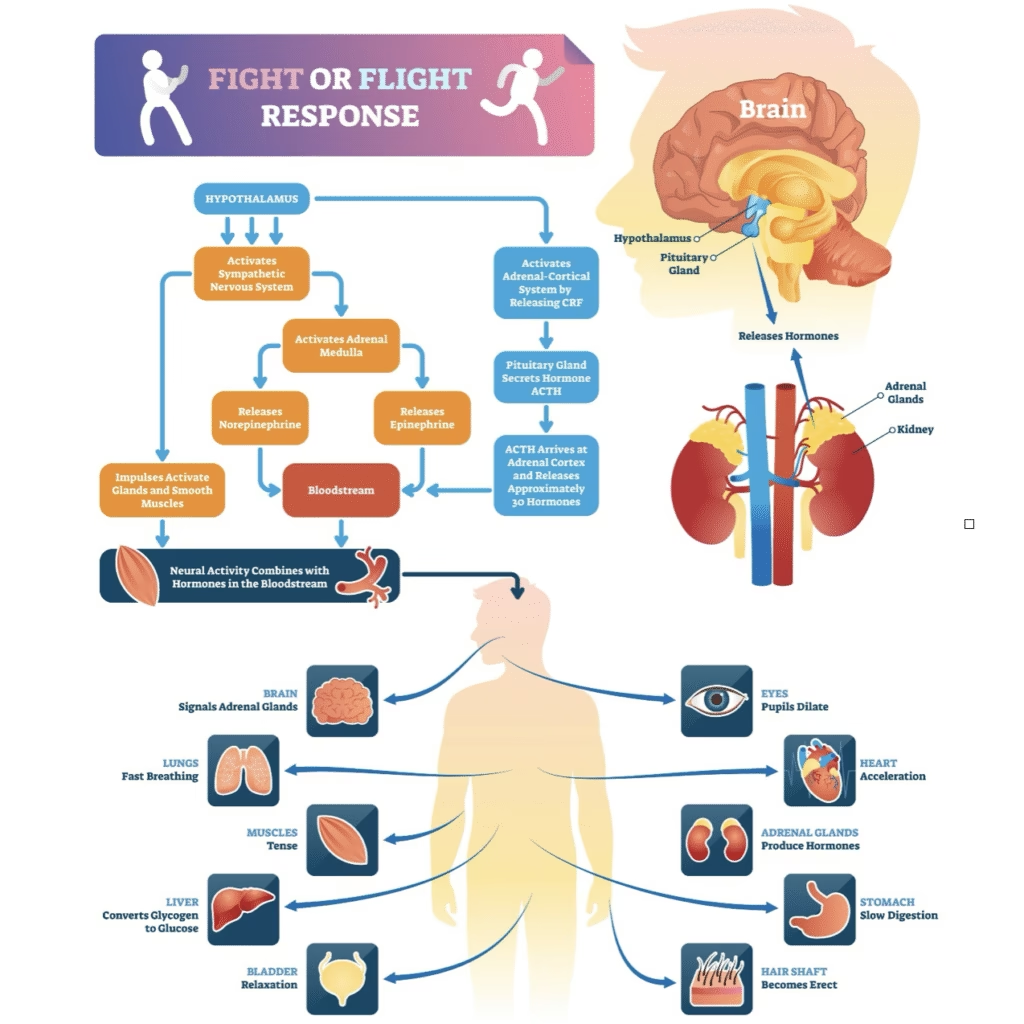
The brain is not the only part of the body that responds to social anxiety. The moment the brain perceives a social threat, it triggers a powerful physical reaction. This is the body’s fight-or-flight response kicking in, and it is behind many of the common symptoms of SAD.
Licensed by Google
Think about the last time you were nervous: did your heart race, your palms sweat, or your stomach get queasy? These are all signs of your body flooding with stress hormones like cortisol and adrenaline. For someone with social anxiety, these physical symptoms can be constant, making everyday life a source of physical distress.
What Causes It and What’s Next
The exact causes of social anxiety are complex, likely a mix of genetics and upbringing. Some research suggests that people might be genetically predisposed to an overactive amygdala, while environmental factors, like having overly critical parents or experiencing bullying, can also contribute.
The good news is that understanding these brain changes is the first step toward better treatment. By learning more about how social anxiety affects the brain, researchers can develop more targeted therapies and medications that help rewire these neural pathways.
#SocialAnxiety #MentalHealth #BrainHealth #Neuroscience #AnxietyAwareness #Psychology


Add a Comment