
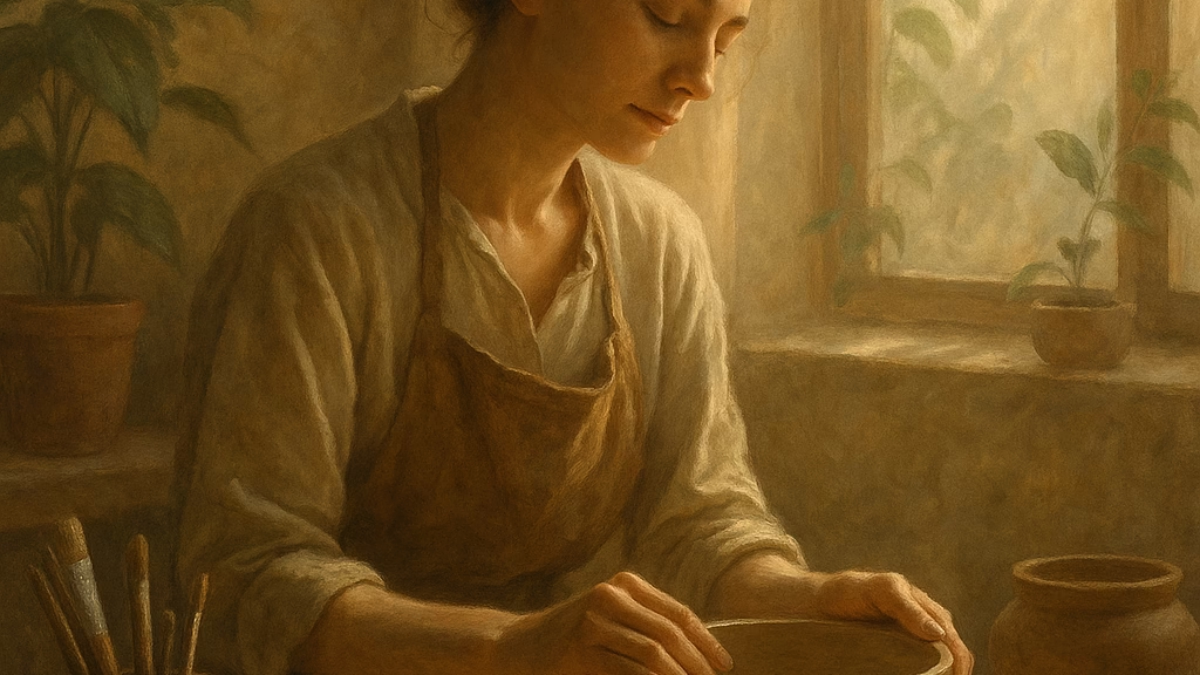
This moment of making, of shaping something with our hands or imagination, can serve as a doorway to inner calmness, and that is exactly what we would like to explore today, when creativity stands not just as fun or decorative. Whereas it can become a mindful practice, a path back to ourselves.
1. The shift from doing to being
We live in a world of doing. Stuff like meeting Checklists, deadlines, and multitasking positions our brains are wired to perform, produce, and finish. But creativity invites a being mode. When we pick up a pencil, or stitch a pattern, or experiment with clay, we often find ourselves drifting into a more relaxed rhythm: time expands, worries fade, attention settles into the moment. Research shows that creative activities help manage stress and pull the mind into the present.
2. Why mindful making works?
One key mechanism is the “flow” state, when we are absorbed in making that self‐critique fade, time seems to slip, and what remains is pure engagement. Studies show that hands-on creative tasks can trigger this immersive state, reduce intrusive thoughts, and activate what one might call a ‘relaxed, alert’ brain mode. Additionally, when we adopt a mindful stance observing our breath, our body, the sensations of making, when we tap into the parasympathetic nervous system, the “rest and digest” system that calms our nervous system.
3. Creativity as a mirror for the inner landscape
There is more than just calm at work here. When we create mindfully, we observe our feelings, our fears, our impulses in the act of making, when we open a conversation with our inner selves. One article describes how “art-based mindfulness” invites us to “connect with ourselves and our surroundings” and “process emotions that might be too big for words.” This reflective dimension gives purpose and depth to the creative process.
4. How to make this your practice?
Here is an interactive invitation:
• Choose any simple creative tools like a sketchbook, clay, collage materials, or a digital drawing app.
• Set a timer for 10–20 minutes, without expectations or goals of a “good” output.
• Begin by noticing: your breath, your body posture, the feel of the tool in your hand.
• Let your attention drift to what you create, and whenever you notice a judgment (“this is rubbish”, “I’m no good”), gently redirect to curiosity (“what led me to that shape?”, “why did I choose that colour?”).
5. Bringing it into daily life
The making does not need to be grand or time-consuming. It could be decorating a corner wall in your room, doodling during your tea break, redesigning your notebook cover, or repurposing old fabric into a cushion. What matters is the presence, the willingness to be attentive as you engage with your materials.
Closing thought
In a world that asks us to constantly accelerate, produce, and deliver, it is revolutionary to stop, to hold colour, run fingers through clay, and let an idea simmer rather than rushing it. This is the gift of the mindful maker, which is by engaging our hands, our senses, our curiosity; we quiet our inner noise and reconnect with our centre.
Sources Referred-
https://pmc.ncbi.nlm.nih.gov/articles/PMC7395604/?utm
https://www.calm.com/blog/benefits-of-creativity?utm


Add a Comment