
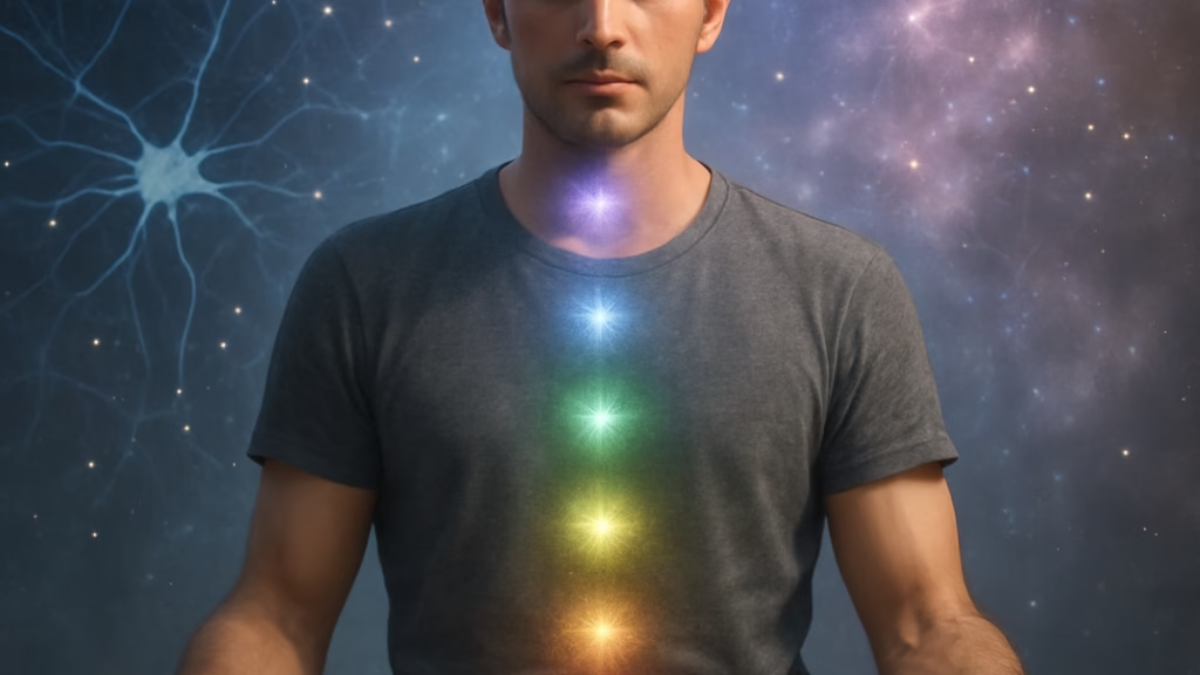
For thousands of years, the concept of chakras has been a cornerstone of Eastern spiritual traditions. In Hinduism and Buddhism, chakras are described as focal points of energy, or ‘prana,’ within the human body. They are often visualized as spinning wheels or centres of energy, which are thought to regulate both physical and psychological well-being in our lives. While they are traditionally viewed as mystical in nature, modern psychology and neurosciences are beginning to uncover the intriguing parallels between the chakra system and human anatomy, physiology, and emotional health.
Origins of the Chakra System
The earliest records on Chakras appear in the Vedas, and the ancient Indian texts that form the philosophical foundation of yoga. Although the precise age of these texts is unknown, and are believed to be somewhere around a thousand years old. The word ‘Chakra’ itself is a Sanskrit word for the English word “wheel,” reflecting the traditional depiction of these centres as spinning discs through which energy flows. In Hinduism, there are typically seven primary chakras aligned along the spinal column, from the base to the crown of the head. On the other hand, in Buddhism, generally four primary chakras are recognised, although various schools of thought expand this number.
The chakra system is intimately linked to the concepts of the physical and subtle bodies. While the physical body consists of visible matter, the subtle body represents energy, mind, and emotions. According to these traditions, energy flows through the subtle body along channels called nadi, intersecting at chakra points. The balance and health of the subtle body can directly influence the physical body and vice versa, suggesting that chakras are more than metaphorical—they represent a framework for understanding the interplay between body, mind, and spirit.
Over time, the concept of chakras has spread beyond India, influencing Tibetan Buddhism and other holistic systems. In the early 20th century, Western spiritualists and occultists published works on Tantra, introducing chakras to Western audiences. Modern Western interpretations often associate chakras with the colours of the rainbow, metals, crystals, astrological signs, foods, and tarot cards. While these extensions are relatively recent, they have made chakra theory a central element of New Age and holistic healing practices.
The Seven Major Chakras
According to the Hindu philosophy, seven primary chakras are identified, each of which corresponds to physical, emotional, and spiritual aspects of human life:
1. Muladhara (Root Chakra): Located at the base of the spine, this chakra governs survival instincts, self-preservation, and basic physiological needs such as sleep, food, and sex.
2. Svadhisthana (Sacral Chakra): Positioned in the pelvis, it regulates emotions, desires, and creativity.
3. Manipura (Navel/Solar Plexus Chakra): Found just below the navel, it governs digestion and the ability to process life experiences, as well as personal power and self-esteem.
4. Anahata (Heart Chakra): Located at the centre of the chest, it is the seat of love, compassion, and connection with others.
5. Vishuddha (Throat Chakra): Situated at the throat, it is associated with communication, authenticity, and self-expression.
6. Ajna (Third Eye Chakra): Positioned between the eyebrows, this chakra governs inner knowledge, intuition, and consciousness.
7. Sahasrara (Crown Chakra): Found at the top of the head, it facilitates spiritual awareness, enlightenment, and connection with the universe.
In yogic philosophy, energy ideally flows upward through these chakras, from the root to the crown. A balanced flow brings positive qualities such as enthusiasm, creativity, love, and joy. Blockages, however, can manifest as fear, anger, jealousy, inertia, or even physical ailments.
Chakras and Health
Proponents of chakra-based therapies argue that imbalances in the chakras can undermine both physical and mental health. For example, disturbances in the navel chakra may affect digestion or emotional regulation, while heart chakra imbalances may manifest as difficulty forming emotional connections. Various holistic practices aim to restore balance in the chakras, including:
• Yoga: Specific poses encourage energy flow through targeted chakras.
• Meditation and Visualization: Practitioners focus on unblocking energy centres.
• Ayurvedic Medicine: Lifestyle and dietary recommendations support energetic balance.
• Reiki and Energy Healing: Techniques intended to realign subtle energy.
• Sound Therapy and Crystal Healing: Use of vibrational tools to stimulate or harmonize chakras.
While these therapies have widespread popularity, their scientific validation remains limited. Research suggests that the benefits may arise from indirect mechanisms such as relaxation, stress reduction, or placebo effects rather than the chakras themselves.
Scientific Perspectives
Although chakras cannot be directly observed, modern science provides several frameworks for understanding why chakra-focused practices may feel effective. Anatomical and physiological theories propose that each chakra aligns with a nerve plexus or endocrine gland. For instance:
• The root chakra may correspond to the inferior hypogastric plexus, influencing the reproductive organs and lower digestive system.
• The heart chakra aligns with the cardiac plexus and thymus gland, linking it to cardiovascular and immune functions.
• The third eye chakra may relate to the pineal gland, which regulates circadian rhythms and has historically been associated with spiritual insight.
These correspondences suggest that chakra locations may reflect functional aspects of the nervous and endocrine systems, which in turn influence both emotional and physical health. Joseph Loizzo, a professor of clinical psychiatry, has proposed a model linking chakras to brain structures:
• Crown Chakra → Neocortex
• Third Eye → Prefrontal Cortex
• Throat → Limbic System
• Heart → Midbrain
• Solar Plexus → Pons
• Sacral and Root → Medulla Oblongata
Loizzo’s model bridges the subtle body of traditional Eastern thought with measurable aspects of human neuroanatomy, suggesting that chakras may reflect complex mind-body interactions, even if direct empirical measurement is currently impossible.
Chakra-Based Practices and Mental Well-Being
While the scientific community has not confirmed the literal existence of chakras, practices targeting these energy centres often yield tangible health benefits. Meditation, yoga, and Reiki are known to:
• Reduce stress
• Lower anxiety and depression
• Decrease blood pressure
• Promote emotional stability and resilience
For example, a 2020 study involving 223 participants practicing chakra-based meditation reported reductions in anxiety and improved perceptions of health. Although the study did not include a control group, it illustrates the potential of chakra-focused practices to enhance psychological well-being. Other studies show that spiritual or energy-based practices may improve mood, encourage relaxation, and strengthen the mind-body connection, providing measurable improvements in overall health.
The benefits related to Relaxation, Placebo, and perceived
Chakra-based practices may also benefit health indirectly. Yoga, meditation, and sound therapy promote relaxation, which can calm the nervous system and reduce stress-related ailments. Additionally, the placebo effect, where a person experiences real improvement due to belief in a treatment, can play a role. Placebo responses are genuine physiological phenomena that may explain some of the reported benefits of chakra-focused therapies.
Even in cases where chakras themselves cannot be scientifically measured, the practices designed to harmonize them can foster a sense of well-being, mindfulness, and emotional regulation.
Bridging Ancient Wisdom and Modern Science
The dialogue between ancient spiritual traditions and modern psychology is evolving. While Western science often struggles to explain chakras within conventional paradigms, emerging theories in bioenergetics, consciousness research, and neuropsychology offer promising bridges. Gap junctions, intracellular signalling, and neural networks may one day provide mechanisms for understanding subtle energy, linking chakras to measurable biological processes.
From a psychological perspective, chakras can also be seen as symbolic frameworks representing human developmental stages, emotional patterns, and states of consciousness. Meditation, breathwork, and yoga often used to “balance” chakras, can influence brain activity, emotional regulation, and self-awareness, reinforcing the practical value of these ancient teachings.
Practical Applications for Daily Life
Whether approached spiritually, symbolically, or therapeutically, chakra work offers practical tools for enhancing health and well-being:
• Meditation: Focus on individual chakras to cultivate awareness and release tension.
• Yoga: Targeted postures encourage energy flow through the spine and major chakras.
• Mindful Diet: Eating foods associated with certain chakras may promote balance.
• Breathwork and Visualization: Techniques to harmonize energy and calm the mind.
• Sound and Colour Therapy: Utilizing tones, vibrations, or colours linked to each chakra.
By integrating these practices into daily routines, individuals can foster a sense of balance, relaxation, and connection, even without scientifically confirming the chakras themselves.
Conclusion
Chakras are a profound example of how ancient wisdom intersects with modern psychology. While their literal existence as spinning wheels of energy has not been scientifically verified, the systems and practices developed around chakras offer measurable benefits. From meditation and yoga to breathwork and Reiki, these practices enhance relaxation, emotional regulation, and overall well-being.
The chakra system also encourages a holistic view of human health, reminding us that body, mind, and spirit are interconnected. Ancient texts provide a framework for understanding this interplay, while modern research continues to explore parallels in neuroanatomy, physiology, and consciousness.
Ultimately, whether approached as metaphysical phenomena, symbolic archetypes, or tools for self-care, chakras offer a bridge between the mystical and the measurable. They invite us to explore the full spectrum of human potential, harmonizing the wisdom of the past with the discoveries of modern science. By embracing both perspectives, we gain a richer, more nuanced understanding of health, consciousness, and the intricate dance between body and mind.
Sources Referred
https://meda.foundation/power-of-chakras-integrating-ancient-wisdom-with-modern-science
https://www.artofliving.org/us-en/meditation/chakras/chakras-guide


Add a Comment