
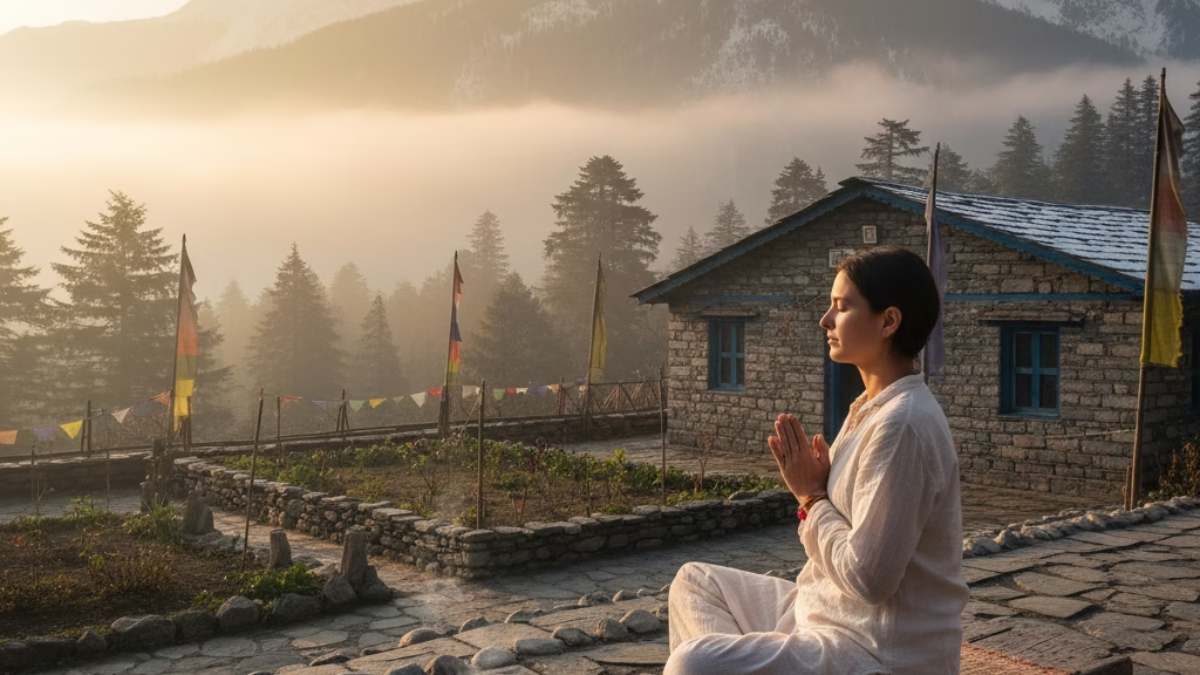
In a world ruled by deadlines, notifications, and relentless motion, silence has become a forgotten luxury. Yet across centuries and cultures, withdrawing from daily noise to seek spiritual clarity has remained a timeless practice. In India where both ancient ashrams and modern retreat centres coexist, as a source of offering spiritual retreats with a way to pause, reflect, and reconnect with the Divine beyond ritual and routine.
What Is a Personal Spiritual Retreat?
A personal retreat is an intentional time set apart from the demands of life to focus solely on one’s relationship with God. Unlike church camps, conferences, or group pilgrimages, a personal retreat is not centred on sermons or schedules. It is built on stillness, solitude, and sacred listening.
In essence, a retreat is less about “doing” and more about “being”, which is on being present, being attentive, and being available to God.
An Indian Context: Silence in the Himalayas
India has long been known as a land where seekers go to withdraw from the world and encounter the divine. Today, many Christians, just like saints and sages of the past, choose places like the foothills of Himachal, the quiet forests of Uttarakhand, or retreat centres in Kerala to step away from life’s noise.
Taking the example of Sadhana Mandir Ashram near Rishikesh or The Divine Retreat Centre in Muringoor, Kerala, they are known for offering spaces where silence is not an absence, but a presence. Visitors leave behind phones, conversations, and activity in exchange for quiet reflection, nature walks, Scripture meditation, and uninterrupted prayer. Surrounded by mountains, rivers, or forests, many rediscover a truth simple yet profound: God speaks most clearly when we are still enough to listen.
Why Do Personal Retreats Matter?
Modern life often compels us to move faster than our souls can cope with. Spiritual fatigue rarely announces itself; it builds quietly under responsibilities, expectations, and emotional strain. A personal retreat interrupts this cycle. It creates room to:
• Rest deeply—physically, mentally, spiritually.
• Process emotions we tend to suppress.
• Realign priorities with God’s will.
• Notice beauty again—whether in Scripture, creation, or silence itself.
When the Bible records Jesus withdrawing to “lonely places” to pray, it also reveals a rhythm we are meant to imitate, and not as escape, but as strengthening.
How to Prepare for a Soul-Refreshing Retreat?
1. Choosing the Right Space- Looking for a place away from digital distractions, places such as mountains, a coastal town, a simple hermitage, or even a quiet guest house.
2. Unplugging- Silence is not just physical, also switching off devices is essential. Let the world run without you for a while.
3. Carry Only What Matters- Essentials include: any good books, a pen, water, and maybe a few worship songs, and ensuring that nothing that turns it into “work.”
4. Enter with Expectation, Not Agenda- A retreat is not a productivity plan. It is an invitation to listen.
After the Retreat: Walking Back with Clarity
The value of a retreat is not in the days spent away, but in how it reorders the days that follow. Many who return from a spiritual retreat speak of sharper peace, renewed priorities, and a quieter heart. Spiritual retreats do not solve life; they strengthen the soul to walk through it.
Final Thought
In the fast-paced development of modern India, where spirituality is often performed more than experienced, the most radical act of faith may simply be to stop. A personal retreat is not about running away from the world, but returning to it with a deeper awareness of God’s presence within it.
Sometimes, the holiest thing you can do is step back, breathe, and listen because silence is not empty; it is also the place where God speaks.
Sources Referred-
https://www.ministrymagazine.org/archive/2013/01/personal-spiritual-retreat:-24-hours-with-god


Add a Comment