
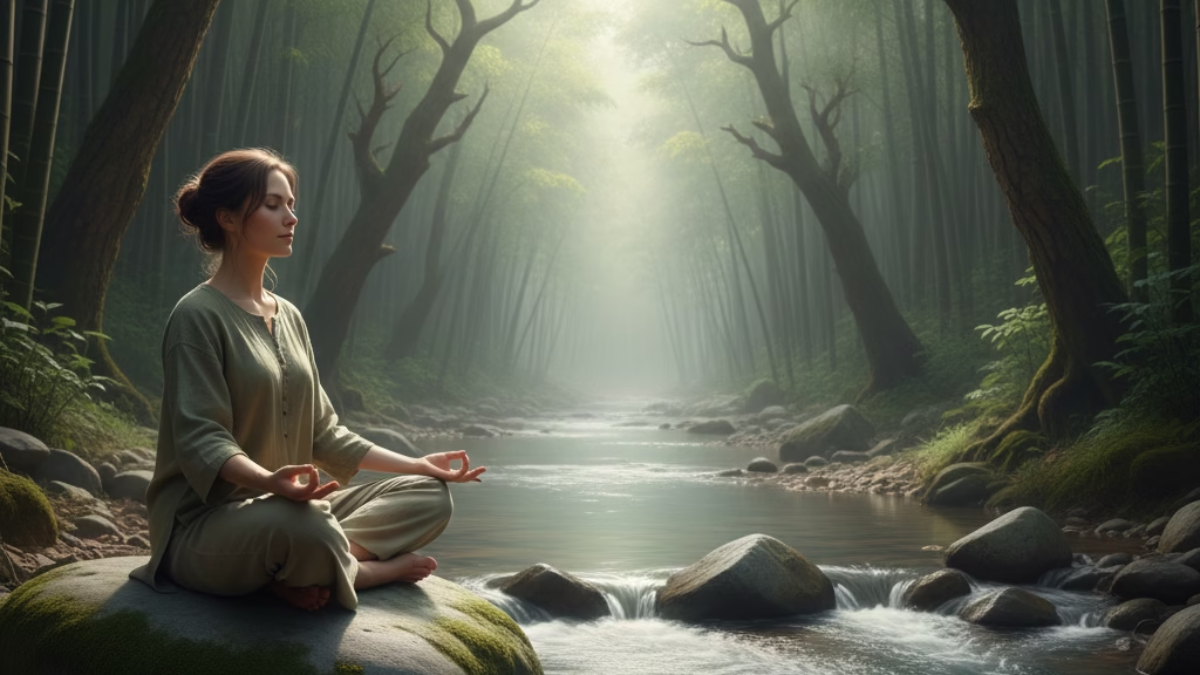
In an era where productivity is revered, calendars overflow, and rest feels like a luxury, many of us live in a constant state of motion without purpose. Taoism, which is a 2,500-year-old Chinese philosophy, offers a gentle yet profound alternative: Wu Wei, which is often translated as effortless action or action in harmony with the natural flow.
Today, when “being busy” is treated like a badge of honour, the principle of Wu Wei provides a refreshing antidote. It teaches us how to flow instead of force, how to move with nature instead of wrestling against it.
What Is Wu Wei?
At its core, Wu Wei means working with ease and not being into any struggles, and acting with a clear approach for timing. Aligning one’s actions with the natural rhythms of life by choosing a purposeful simplicity over hurried complexities.
As an example, a river can be considered in this case. A river moves steadily and effortlessly, always reaching its destination, not by pushing harder, but by flowing intelligently around obstacles.
Why Our Modern Lives Need Wu Wei?
In today’s hyperconnected world, over-busy schedules and tasks involve some important points which can be understood as;
- A mental burden: constant pressure to accomplish more
- A physical drain: fatigue, insomnia, and stress-related issues
- A spiritual emptiness: doing many things but feeling disconnected
Taoism does not tell us to abandon responsibilities; rather, it tells us to approach them differently.
How Wu Wei Can Combat Over-Busyness?
1. Letting Go of Over-Control- We often exhaust ourselves trying to micromanage every detail. As per Wu Wei, it can be said as if focusing only on what naturally responds to our effort, and letting the rest unfold.
2. Acting at the Right Moment- Pushing ourselves at the wrong time creates burnout.
Taoism teaches timing: act when conditions support you, rest when they do not.
3. Prioritizing Simplicity- A core Taoist insight is that the simpler the path, the greater the peace. However, decluttering our schedules, obligations, and mental noise helps energy flow freely.
4. Trusting Natural Pace- Modern life teaches “faster is better.” Taoism reminds us that slow can be strong, and consistency matters more than intensity.
5. Creating Space for Stillness- Stillness is not idleness; rather, it is all about recharging. Moments of quiet allow creativity, clarity, and emotional balance to emerge effortlessly.
6. Moving Through Life with Ease, Not Resistance- When we stop resisting what is natural and inevitable, we conserve emotional energy. This allows us to respond and not react.
Referring to some practical ways to practice Wu Wei daily, it can be understood gradually, such as;
- Taking short pauses between tasks instead of constantly rushing.
- Remove non-essential commitments from your schedule.
- Doing one thing at a time, as flow cannot coexist with overwhelm.
- Observe your energy levels and act when you feel aligned.
- Practice mindfulness, slow breathing, and intentional stillness.
Conclusion
Taoism’s philosophy of Wu Wei is not a retreat from life; rather, it is a return to life. It teaches us how to work with the world instead of against it, how to act with purpose rather than panic, and how to flow gracefully through the complexities of modern living. When we embrace effortless action, we reclaim our time, our energy, and our inner balance.
Sources Referred-
https://terebess.hu/english/tao/mitchell.html
https://plato.stanford.edu/entries/laozi
https://www.bbc.co.uk/religion/religions/taoism


Add a Comment