
Exploring the World of Energy Therapy
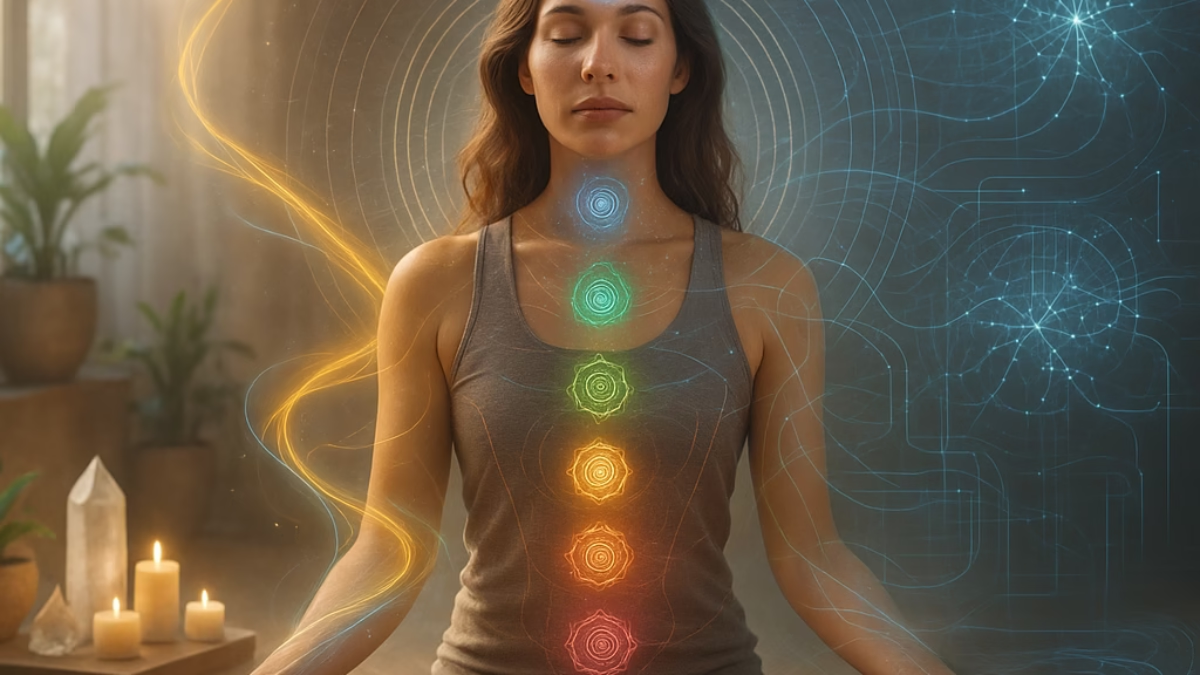
The concept of energy therapy, also known as complementary or alternative medicine, has been around for thousands of years, with a growing number of people becoming interested in its potential benefits for various health conditions. These therapies operate on the principle that imbalances or blockages in the body’s invisible “biofield” can lead to illness and discomfort. The goal of energy therapy is to realign these energy fields to promote overall health and well-being, often encouraging positive emotions and thoughts in the process.
Practitioners, who can be trained professionals or healthcare providers, use non-invasive techniques to harmonize the body’s energy. Many people use these therapies as a supplement to conventional medical treatments, not as a replacement.
Popular Types of Energy Therapy
Energy therapy encompasses a wide range of practices. Some of the most well-known include Reiki, acupressure, and acupuncture.
Reiki, a Japanese healing technique founded by Dr. Mikao Usui in the 1920s, is based on the belief that everyone has an innate ability to heal themselves. A Reiki practitioner acts as a conduit for “universal life force energy,” which they can manipulate by lightly placing their cupped hands on or near the recipient’s body. The goal is to encourage the body’s natural healing processes.
Acupressure, a form of Traditional Chinese Medicine (TCM), is similar to acupuncture but doesn’t use needles. Instead, it applies manual pressure to specific points on the body, known as acupoints, to encourage the free flow of “qi” (pronounced “chee”), or the body’s energy. You can perform acupressure on yourself or with a practitioner’s help.
Acupuncture, another TCM practice, uses fine needles inserted into specific acupoints to stimulate stagnant or blocked energy. While its origins are ancient, modern science has validated some of its effects. It’s known to trigger responses in the body that can affect inflammation, neurochemical production (like dopamine and endorphins), immune function, and circulation. This therapy must be performed by a qualified and licensed acupuncturist who has completed extensive training.
What Are the Applications of Energy Therapy?
The primary aim of energy therapy is to facilitate the smooth, free-flowing movement of energy throughout the body. People seek out these treatments for a wide variety of reasons, from addressing specific ailments to simply boosting their general well-being. Sessions are often available at wellness centres, massage parlours, and increasingly, in more traditional medical settings like hospitals and clinics.
Individuals often turn to energy therapy to help with:
- Sleep issues
- Pain and headaches
- Stress and anxiety
- Fatigue
- Depression
- Nausea
The Science Behind the Practice
While the “energy” aspect of these therapies is difficult to measure scientifically, a growing body of research supports their effectiveness for specific conditions.
- A 2021 study suggested that a single energy medicine session could alleviate pain from carpal tunnel syndrome, improve sleep, and reduce stress.
- A 2021 trial found that acupressure might help alleviate labour pain.
- A 2020 systematic review concluded that acupressure is a safe and effective method for treating chronic lower back pain.
- A small 2021 study indicated that Reiki could be a cost-effective way to quickly relieve back pain and improve daily activities for those with a herniated disk.
- Research from 2020 supports the effectiveness of acupuncture for pain from migraines and fibromyalgia, as well as neck and lower back pain.
These studies, along with a large meta-analysis involving over 17,000 patients, highlight that while not a cure-all, these therapies can be valuable complementary treatments.
Distance Healing – The Concepts
Alternative healing modalities that do not require physical touch, often referred to as “distance healing” or “remote healing,” are based on the belief that a person’s body is surrounded and permeated by an energy field. Practitioners of these methods believe that they can manipulate this energy field from a distance to promote healing and well-being in a client.
Some common types of distance healing include:
- Reiki: This is a Japanese form of energy healing where practitioners act as a channel for “universal life force energy” and direct it toward the client. In distance Reiki, the practitioner uses special symbols, visualizations, and their intention to send this energy to a person regardless of their location.
- Pranic Healing: This is a no-touch system of energy healing that focuses on cleansing and energizing the body’s aura and chakras from a distance to promote healing.
- Quantum Healing: This approach is based on the principles of quantum physics, suggesting that everything is interconnected at a subatomic level. Practitioners believe they can use this connection to facilitate healing on a cellular level over a distance.
Proponents of these practices often cite concepts from quantum physics, like “quantum entanglement,” to explain how a practitioner and recipient can be energetically linked despite being in different locations. While many people report positive experiences with these therapies, it’s important to note that the scientific community views these claims with skepticism. Much of the research on these methods is considered to have methodological flaws, and there is no conclusive scientific evidence to prove their effectiveness beyond the placebo effect.
Is Energy Therapy Right for You?
When performed by a qualified professional, energy therapies are generally safe for most people. Before beginning, it is a good idea to talk with a potential practitioner about their training and experience.
However, it is crucial to speak with your doctor before starting any new treatment, especially if you plan to use it alongside your current medical plan. If you are pregnant, on medication, or have a pre-existing medical condition, a discussion with your healthcare provider is essential. Energy therapy should never be used as the sole treatment for serious or life-threatening conditions.
In essence, therapies like Reiki, acupressure, and acupuncture can be powerful tools for enhancing mental and physical health. By consulting with a healthcare professional, you can safely explore how these ancient practices might fit into your modern wellness routine.


Add a Comment