For decades, corporate wellness existed on the fringes of business strategy, often appearing as an afterthought packaged into gym stipends, occasional mindfulness webinars, or fruit baskets in the breakroom. While these initiatives were introduced with good intentions, they frequently treated employee wellbeing as an individual responsibility rather than an organizational outcome. Today, forward-looking organizations are recognizing that superficial perks cannot compensate for unsustainable workloads, fractured communication, or chronic emotional exhaustion. By repositioning holistic wellness as a structural pillar of workplace resilience, companies can address the root causes of burnout and establish a foundation for enduring performance.
Burnout is rarely the result of a single busy week or an isolated personal struggle. Instead, it emerges as a tangible organizational risk that quietly erodes safety, impairs judgment, and threatens operational continuity. When teams operate in a state of prolonged cognitive and emotional overload, the consequences extend far beyond individual fatigue. Decision-making becomes reactive rather than strategic, attention to detail slips, and interpersonal friction rises. In high-stakes environments, exhausted employees are more prone to safety oversights and compliance errors, while in knowledge-driven sectors, chronic stress stifles innovation and accelerates costly turnover. Viewing burnout purely through the lens of human resources misses its broader strategic impact; it is an operational vulnerability that requires structural intervention.
Designing an organization around mental, emotional, and physical wellbeing demands more than encouraging employees to take breaks. It requires leaders to examine how roles are scoped, how workflows are paced, and how policies either protect or deplete human energy. Role clarity is one of the most effective antidotes to workplace stress. When expectations are ambiguous or responsibilities continuously expand without corresponding resources, employees remain in a perpetual state of vigilance. Leaders can counter this by establishing realistic capacity boundaries, defining clear priorities, and ensuring that workloads align with human cognitive limits rather than idealized productivity metrics.
Workflows also play a decisive role in sustaining or undermining resilience. Modern workplaces often reward constant availability, fragmenting deep focus with endless notifications and back-to-back meetings. By restructuring workflows to protect uninterrupted periods for complex thinking and incorporating deliberate recovery cycles after intense project sprints, organizations create a rhythm that supports sustained output. Policies around paid time off, flexible scheduling, and after-hours communication further reinforce this architecture when leaders model those boundaries themselves. Culture is shaped less by written handbooks and more by what leadership consistently tolerates and demonstrates.
Equally transformative is the integration of contemplative practices, somatic awareness, and emotional intelligence into practical leadership systems. Traditional management training often emphasizes analytical rigor and execution while neglecting the internal capacities required to lead human beings through complexity. Contemplative practices cultivate the mental clarity and presence needed to pause before reacting under pressure, allowing leaders to respond thoughtfully rather than impulsively. Somatic awareness deepens this capability by helping individuals recognize the physical signals of stress—such as tension, shallow breathing, or restlessness—before those sensations escalate into emotional reactivity or exhaustion. When leaders understand how stress manifests in the body, they become better equipped to regulate their own nervous systems and foster calmer, more grounded team environments.
Emotional intelligence bridges internal self-awareness with collective team dynamics. Leaders who possess strong emotional intelligence listen attentively, validate diverse perspectives, and navigate conflict with empathy and candor. Rather than suppressing difficult emotions or avoiding uncomfortable conversations, they create psychological safety where team members can voice concerns early, admit mistakes without fear of humiliation, and collaborate openly. This relational trust acts as a buffer during periods of rapid change or external uncertainty, enabling teams to adapt together rather than splinter under pressure.
By uniting these human-centered capacities with concrete operational frameworks, MysticVerse Global reframes personal healing as a vital catalyst for healthier teams and sustainable organizational excellence. This approach recognizes that organizations are living ecosystems composed of human nervous systems, relationships, and shared habits. When individuals are supported in healing from chronic stress and developing deeper self-awareness, the benefits ripple outward into meetings, project execution, and client interactions. Personal wellbeing ceases to be a private luxury pursued outside office hours and becomes an active driver of collective clarity, creativity, and endurance.
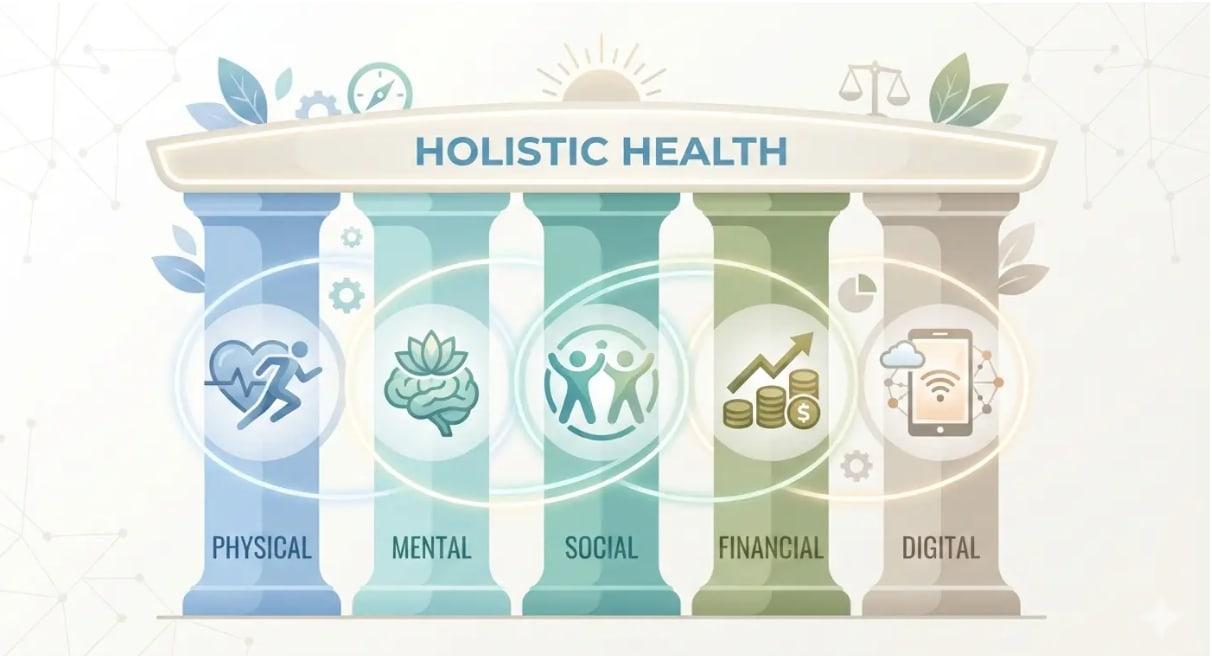
Ultimately, treating holistic wellness as a structural pillar shifts the central question of leadership from how much output can be extracted from people to how environments can be designed so people consistently thrive. Organizations that embed wellbeing into their operational DNA do not sacrifice ambition or accountability; rather, they build the internal stability required to pursue ambitious goals without burning through their most valuable asset. When mental, emotional, and physical health are woven into daily leadership practices and organizational systems, resilience stops being a crisis response and becomes the natural state of the workplace.