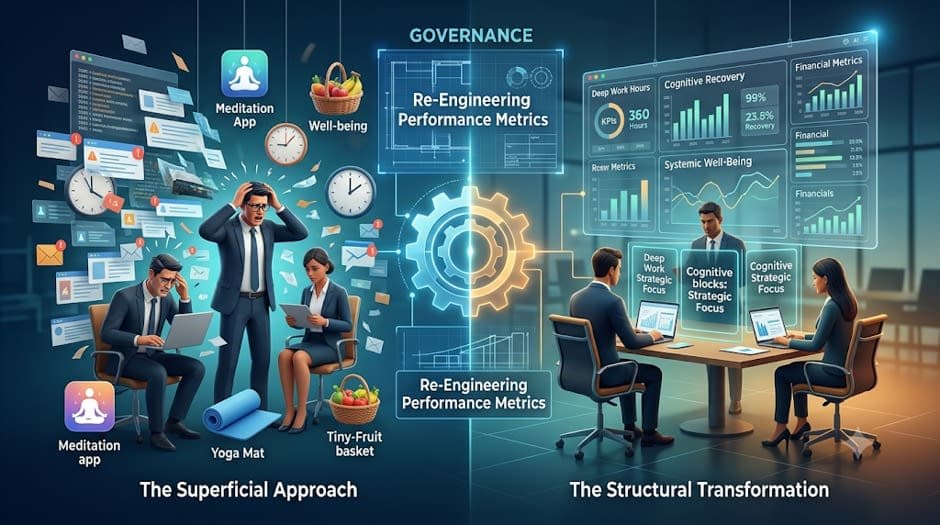

For decades, the standard corporate answer to employee well-being was remarkably simple: partner with a local fitness chain, hand out gym memberships, and host an annual health screening. However, as the boundaries between work and home dissolve in today’s hybrid, always-connected landscape, these surface-level perks have proven inadequate.
Modern corporate workers are not merely looking for opportunities to exercise after hours—they are battling chronic sensory overload, sedentary fatigue, and systemic burnout. True corporate wellness has evolved from a passive benefits package into an active daily practice. To thrive, professionals require a multi-dimensional approach that integrates nervous system regulation, metabolic nourishment, occupational ergonomics, and lifecycle support directly into the rhythm of the workday.
1. Burnout Recovery & Nervous System Decompression
From Time Management to Energy Management
Traditional productivity methodologies focus on squeezing maximum output from every hour of the calendar. But when an individual is operating on severe exhaustion, time management fails completely. The modern professional must transition to energy management. Every human operating system runs on an internal battery influenced by cognitive load, emotional stress, and physical vitality. Protecting this battery requires tracking natural energy dips—such as the mid-afternoon trough—and matching high-demand deep work with peak energy windows rather than pushing through continuous exhaustion.
The Micro-Break Revolution & Somatic Reset
When calendar blocks are back-to-back, long rest sessions are often unrealistic. The solution lies in the "micro-break"—brief, targeted interventions that down-regulate the nervous system mid-day.
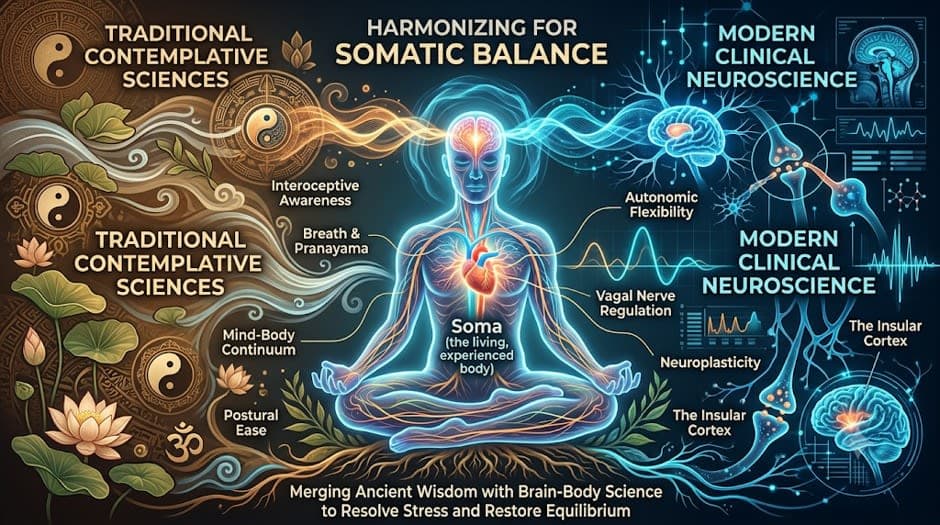
• Vagus Nerve Stimulation: Taking 60 seconds to practice long, slow exhalations (such as 4-second inhales followed by 8-second exhales) stimulates the vagus nerve, signaling safety to the brain and dropping cortisol.
• Deskercise & Somatics: Gentle seated spinal twists, neck releases, and shoulder rolls release physical tension stored in connective tissues, preventing acute stress from hardening into physical pain.
Reversing Digital Fatigue
Screen-induced sensory overload drains mental stamina long before the physical body tires. Mitigating digital fatigue requires structural cognitive offloading. Setting non-negotiable communication boundaries—such as disabling notifications past designated hours and batching email reviews—prevents the perpetual "fight-or-flight" response triggered by pinging notifications.
2. Functional Nutrition & Metabolic Health for Desk Workers
The "Brain Fog" Blueprint
The classic 3:00 PM slump is rarely a lack of willpower; it is often a metabolic reaction. High-sugar office snacks, refined carbs, and processed convenience meals cause rapid spikes in blood glucose, followed by steep crashes that manifest as acute brain fog. Replacing quick-fix sugars with functional foods—omega-3 fatty acids, walnuts, dark leafy greens, complex carbohydrates, and lean proteins—delivers a steady supply of glucose to the brain, maintaining sharp cognitive focus throughout the day.
Chrononutrition for Hybrid Schedules
With fluid work hours, eating schedules often become erratic. Chrononutrition—the alignment of food intake with our biological circadian rhythms—is vital for hybrid professionals. Eating substantial, nutrient-dense meals within consistent daylight windows protects sleep architecture and prevents nocturnal metabolic disruption, ensuring that late-night work sessions do not compromise evening restoration.
Smart Hydration & Adaptogens over Caffeine Overkill
Reaching for a third or fourth cup of coffee creates a cycle of artificial adrenaline spikes followed by jittery exhaustion. Elevating daily hydration with electrolytes and integrating functional adaptogens—such as Ashwagandha for cortisol modulation or Lion's Mane for mental clarity—provides sustainable vitality without disrupting night-time sleep cycles.
3. Occupational Ergonomics & Movement Science
Biophilic & Inclusive Workstations
Physical environments dictate mental states. Biophilic workplace design—incorporating natural light, indoor greenery, organic wood textures, and clean air filtration—measurably lowers ambient physical stress. Coupled with personalized workstation ergonomics (ensuring eye-level monitors, supported lumbar curves, and neutral wrist placement), biophilic adjustments create a sanctuary that nurtures both focus and physical ease.
The Sedentary Safeguard
Prolonged sitting places severe compressive forces on the lumbar spine and shortens hip flexors, leading to chronic joint pain and reduced systemic circulation. Countering this does not require hours at the gym; it requires continuous, low-intensity movement throughout the day:
• Active Commuting: Parking further away or exiting transit one stop early adds effortless movement.
• Walking Meetings: Converting routine audio calls into walking sessions boosts circulation and sparks creative problem-solving.
Post-Work Kinetic Reset
To undo eight hours of typing and hunching, an evening kinetic reset is essential. A 10-minute routine focusing on chest openers, hip openers, and thoracic spine mobility acts as a physical decompression phase, signalling to the body that the workday is officially over.
4. Holistic Self-Care & Lifecycles in Corporate Environments
Hormonal Health & Menopause Support
A truly inclusive workplace acknowledges biological lifecycles. Fluctuations associated with menstrual cycle phases, perimenopause, and menopause significantly impact energy, body temperature, and stress resilience. "Cycle syncing"—aligning intensive task loads with high-energy phases and allowing restorative flexibility during lower-energy periods—empowers professionals to sustain high performance while respecting their physiological needs.
Financial Wellness as Mental Health
Workplace anxiety is frequently tied to external financial pressures. Holistic wellness programs must treat financial literacy as a core mental health pillar. Offering structural resources for personal budgeting, retirement planning, and building emergency funds mitigates background economic stress, freeing mental bandwidth for creative and professional fulfilment.
Psychological Safety & Micro-Boundaries
No ergonomic chair or superfood smoothie can replace the psychological safety of a healthy team culture. True well-being flourishes when individuals feel safe to express capacity limits, ask for support, and establish micro-boundaries—such as decline-free focus blocks or clear response expectations. When teams actively protect each other’s well-being, collective resilience replaces individual burnout.
Conclusion: Crafting Your Sustainable Daily Rhythm
Holistic corporate wellness is not an all-or-nothing overhaul; it is built through small, intentional choices repeated daily. By honouring your nervous system, nourishing your body, optimizing your physical workspace, and fostering clear interpersonal boundaries, you transform your daily routine from a cycle of depletion into a sustainable model of human performance and lasting vitality.